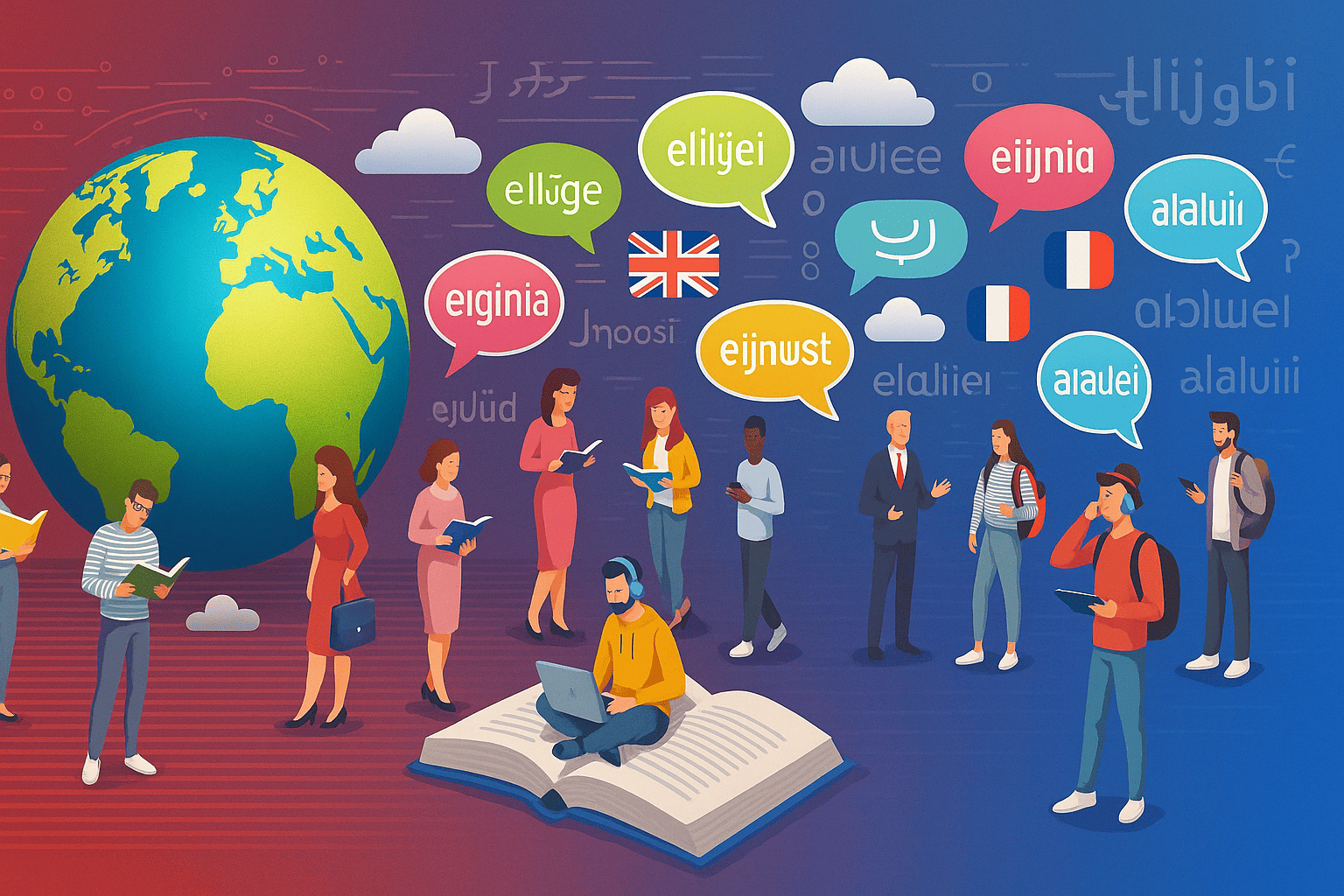
Language learning is often viewed as a daunting task, but research shows that focusing on a smaller, more targeted vocabulary can drastically improve your ability to understand and communicate in a new language. Studies suggest that learning the top 1000 most frequently used words in any language can help learners comprehend approximately 70-80% of everyday written and spoken communication.
Why the Top 1000 Words Matter
In any language, certain words occur far more frequently than others. These are often basic verbs, nouns, pronouns, and conjunctions that form the backbone of most sentences. By focusing on these high-frequency words, learners can quickly build a strong foundation that enables them to engage in conversations and understand content in books, news articles, or even movies.
For example:
- In English, words like “the,” “is,” “and,” “you,” and “have” are used so frequently that learning them early gives learners an immediate advantage.
- Similar principles apply to languages like Spanish, French, or Chinese, where basic connectors and commonly used verbs enable faster comprehension.
The Research Behind the Numbers
Multiple studies and linguistic analyses back up the idea that learning high-frequency words leads to significant language comprehension. A study by Nation (2006) on vocabulary size and text coverage found that the 1000 most common words in English account for roughly 80% of the words in most everyday communication .
This phenomenon is not exclusive to English. In many other languages, a small subset of high-frequency words provides substantial coverage of everyday interactions. For example:
- French: Research indicates that around 1000 words can cover 85% of spoken French .
- Spanish: Similarly, about 1000 words can cover up to 87% of conversational Spanish .

Benefits of Mastering High-Frequency Words
- Faster Comprehension: Since high-frequency words dominate everyday conversations, learners can quickly understand the gist of most texts, making reading and listening exercises less overwhelming.
- Boosts Confidence: Understanding 70-80% of the language helps build confidence, motivating learners to engage more in conversations and practice regularly.
- Real-world Application: Learning these words equips learners with the essential vocabulary they need for daily life, from navigating travel to handling basic conversations at work or school.
Taking It Further
Once learners have mastered the top 1000 words, they can start adding more specialized vocabulary, improving their fluency in specific areas like business, academics, or travel. Tools like spaced repetition systems (SRS) and frequency-based word lists are great resources for targeting high-frequency words.
If you’re interested in exploring some word lists or language learning tools that align with this approach, you can check out these resources:
- The Oxford 3000 Word List for essential English words.
- Top 1000 Spanish Words.
- Le Monde’s Top 1000 French Words.
Conclusion
Learning a language doesn’t require memorizing tens of thousands of words. By focusing on the most frequently used 1000 words, learners can achieve substantial comprehension in a short amount of time. This strategy lays a strong foundation for further learning and provides a fast track to engaging with the majority of the language used in everyday contexts.
Comments (0)

Categories
Recent posts

Importance of Sanskrit In Modern ...
30 Jun 2025